Organizing team building for large groups is a nightmare. Small team events? Easy. Book a restaurant, maybe do some trivia, everyone bonds over drinks and that’s it.
But 50+ people? That’s when half the group doesn’t show up. The other half shows up but wishes they hadn’t. People split into their usual cliques. The warehouse guys stay on one side of the room. Marketing hovers by the food. IT checks their phones.
It costs companies money. Gallup found productivity tanks by 20% when large teams feel disconnected. Gusto did research showing 55% of employees at big companies don’t even know their coworkers.
But when companies get team building for large groups right, the payoff is massive. Forbes says businesses with strong team culture see 4X higher revenues. Four times! The Harvard Business Review found these events boost communication by 50% when done properly.
The problem is most team building isn’t that great. Activities that work for 10 people die at 100. Finding something that actually works at scale without making everyone cringe? That’s the real challenge.
Why Most Large Group Events Fail Spectacularly
The logistics alone will destroy you if you’re not careful.
Where do you fit 100 people? How do you split them without it seeming random? What happens when people in the back can’t hear anything? These questions seem basic until you’re standing in front of 80 confused faces wondering what they’re supposed to be doing.
Communication breaks down fast. In small teams, everyone can talk. Everyone gets heard. But throw 60 people in a room and suddenly you’ve got maybe three loud people dominating every conversation while everyone else zones out. Quiet people vanish. New employees might as well be invisible. Remote workers become background noise.
Then there’s this psychological thing called the bystander effect – when groups get big, individuals stop trying because they figure someone else will handle it. Why stress about the team challenge when there are 12 other people on your team? This kills engagement instantly.
Not everyone can do physical stuff either. Some people have mobility issues. Others get anxious performing in front of crowds. Activities that thrill half your team might make the other half uncomfortable or feel excluded.
And remote teams? Forget it. Most corporate team building activities assume everyone’s in the same room. Add Zoom people and suddenly you’ve created this two-tier system where remote folks watch everyone else have fun. Not great.
Start Planning Earlier Than You Think
Most disasters happen because someone wakes up three weeks before and goes “we should probably do a team thing” and panic-books whatever’s available. Don’t be that person.
Real planning for team building for large groups starts three, maybe four months out. Not because it’s complicated, but because everything just takes forever when you’re coordinating dozens of people’s schedules and trying to get budget approval and booking venues that can actually fit everyone.
First ask yourself:
- What are you trying to fix?
- Are departments not talking?
- Is morale bad after layoffs?
- Do remote people feel disconnected?
Different problems need different solutions. Don’t just book something that sounds fun and hope it magically solves your culture issues.
Then there’s also the cost. Per-person costs might drop with volume but when you’re feeding 150 people and renting a venue and buying supplies, it adds up shockingly quickly. Budget realistically. Then add 20% because something always costs more than expected.
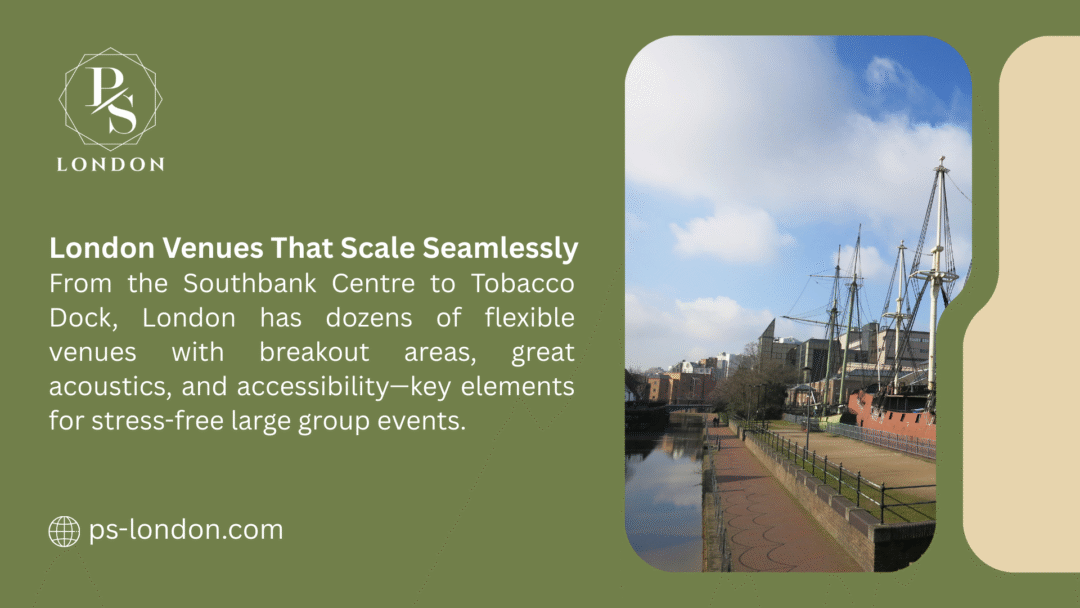
Finding a venue is harder than it looks. Needs space for everyone without feeling cramped. Good acoustics – if people can’t hear instructions the whole thing falls apart. Climate control because a too-hot or freezing room kills energy immediately.
If you’re doing indoor team building activities, make sure there’s breakout space. For outdoor team building activities, have an actual rain plan.
Timing matters way more than people realize. December? Everyone’s swamped. Month-end? Finance and sales are crunching numbers. Actually ask department heads before picking dates.
| What Needs Doing | When to Do It | Why This Matters |
| Figure out what you’re trying to achieve | 3-4 months before | You need to know what success looks like before planning anything |
| Get budget locked down | 3-4 months before | Can’t book venues without approved money |
| Book the venue | 2-3 months before | Good spaces for 100+ book up way ahead |
| Pick your activities | 2-3 months before | Need time to think through if they’ll actually work |
| Tell everyone it’s happening | 6-8 weeks before | People need advance notice to not schedule other stuff |
| Order whatever supplies you need | 3-4 weeks before | Last-minute orders get delayed or lost |
| Confirm all the details | 1 week before | Final headcount, dietary stuff, accessibility needs |
Communicate throughout the process. Send a save-the-date early. Follow up with details. Be transparent about what’s happening so people don’t spend weeks dreading forced vulnerability exercises.
Activities That Don’t Completely Fall Apart
Most team building activities work fine for small groups and become total chaos at 50+ people. You need stuff designed for scale or things that can run in parallel with multiple small teams simultaneously.
Scavenger hunts are surprisingly reliable. Break people into teams of 5-8, give them challenges to complete or items to find, let them compete. Modern apps handle scoring and photo verification automatically. Works in cities, in buildings, in parks – basically anywhere. People actually enjoy these, which is saying something for corporate events.
Problem-solving stuff scales well if structured right. Give teams basic materials – paper, tape, marshmallows, random office supplies – and a goal like build the tallest tower or strongest bridge. Competition keeps energy up. Small teams mean everyone has to participate instead of hiding. These problem solving team building activities at least feel somewhat connected to actual work.
Games for large groups need simple rules. Organizational challenges work great – like line up by birthday without talking. Everyone participates at once. No standing around waiting. No watching 10 people do something while 90 people get bored.
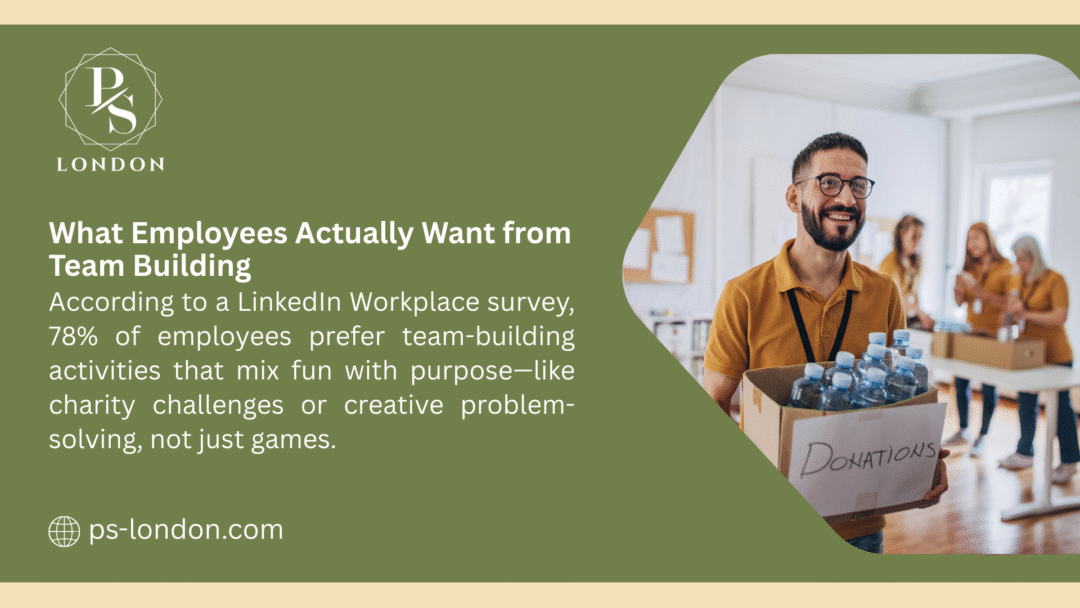
Creative projects give you something tangible afterward. Collaborative murals where each team paints a section. Building bikes for charity. Making something real feels more meaningful than games that evaporate the second they end. Plus you can display artwork in the office so the impact lasts past the event.
If you have time and space, try rotation stations. Set up different activities in different areas, rotate groups every 20-30 minutes. Solves the “everyone likes different stuff” problem. Some people love competition. Others prefer creative work. Some want physical challenges, others don’t. Rotation lets people find something they don’t hate.
Fun team building activities don’t need big budgets. Sometimes simple icebreakers work better. Two Truths and a Lie in small circles. Quick trivia. Building a story one word at a time. Basic stuff beats elaborate activities that need 45 minutes of explanation.
Remote and Hybrid Teams Make Everything Harder
Remote work completely changed team building for large groups. You can’t just put everyone on Zoom and expect magic to happen while people stare at tiny video boxes.
Virtual scavenger hunts work differently – teams race to find household items within time limits. Coffee mug from a favorite trip, something red, oldest possession, whatever. Everyone’s on equal footing working from their own space. Digital whiteboards let distributed teams collaborate even across time zones.
Hybrid events are the toughest. Remote people usually end up as second-class participants watching in-person people have real fun. Good hybrid team building for large groups needs intentional design. Maybe mixed remote and in-person teams for virtual escape rooms. Or separate but parallel activities with shared discussion at the end.
Online trivia scales nicely. Platforms built for this handle hundreds of people, create random teams, and manage scoring automatically. Breakout rooms let teams huddle privately, recreating that small-group dynamic.
Virtual coffee pairings randomly match employees for short video chats. Not traditional team building exactly, but regular random pairings create connections that wouldn’t happen otherwise. Accounting might never talk to operations without structured randomness.
Professional facilitators matter more for virtual and hybrid setups. Someone needs to handle tech issues, keep energy up, make sure quiet people get heard, adjust when things aren’t working. Costs money but makes the difference between tolerable and actually good.
Checking If Team Building Worked
Spending money and time on team building for large groups without measuring results is dumb. You need to know if this helps or if it’s an expensive theater.
Start with baseline surveys before the event. Ask about relationships with colleagues, understanding of other departments, comfort collaborating across teams, general job satisfaction. You need starting points for comparison.
Quick post-event surveys capture immediate reactions. Keep them short, five questions max. What worked? What didn’t? What should change? Send within 24 hours while it’s fresh.
Real impact shows up later though. Follow-ups at 30, 60, and 90 days reveal whether excitement translated to behavior changes. Are people collaborating more across departments? Having more informal chats? Reaching out to teams they barely knew before?
Watch for organic changes. Do employees from different departments actually talk now? Have meeting dynamics shifted? Are teams working together when they didn’t before? These signals matter more than survey scores.
| What to Measure | How | When |
| Did people show up and participate | Watch during the event | Real-time |
| Did they like it | Quick survey | Within 2 days |
| Are relationships stronger | Follow-up questions, watch for new connections | 30-60 days |
| Is communication better | Team feedback, meeting quality | 60-90 days |
| Did productivity improve | Project timelines, collaboration patterns | 90+ days |
| Did culture shift | Employee satisfaction, retention | 6-12 months |
Don’t Leave People Out
Inclusive team building for large groups means considering who’s in the room and what they might need.
Physical activities need real alternatives. Not everyone can run around or climb things or stand for hours. Build in roles that matter but don’t require physical ability. In scavenger hunts, some people search while others handle clues, navigation, documentation. Everyone contributes. Nobody feels useless.
Sensory stuff gets overlooked constantly. Loud music and bright lights overwhelm some people. Crowded spaces trigger anxiety. Offer quiet spaces where people can take breaks without missing everything. Give honest advance notice so people can mentally prepare.
Introverts and extroverts experience events opposite ways. Extroverts feed off group energy. Introverts find large gatherings draining. Balance high-energy large group stuff with smaller breakouts. Don’t force spotlight moments unless people volunteer. Most people hate being put on the spot in front of 100 colleagues.
Cultural awareness matters in diverse workplaces. Different cultures approach personal space, competition, and humor differently. Activities should allow various participation styles, not assume everyone wants to be loud and competitive.
Language considerations come up in international companies. Instructions need clarity. Use visual demonstrations, not just verbal explanations. Avoid activities relying on wordplay or cultural references that exclude non-native speakers.
Unique team building activities work because they offer multiple participation paths instead of one narrow experience.
What Happens After
The event ending isn’t the end. Without follow-up, even great team building for large groups fades within weeks.
Share photos and videos. Create shared albums where people add their own pictures and tag colleagues. Visual reminders spark conversations and show people who couldn’t attend what happened.
Publicly recognize participation. If there were competitions, acknowledge winners in company communications. Highlight impressive teamwork, creative solutions, leadership that emerged. This validates effort and encourages future participation.
Schedule the next event before momentum dies. You don’t need monthly events, but quarterly or twice-yearly maintains continuity. Mix it up and rotate between private dining for relationship building and action challenges.
Smaller touchpoints between major events keep relationships alive. Monthly coffee meetups. Weekly team lunches. Regular cross-department sessions. These prevent relationships from going cold.
Is All This Worth It?
Team building for large groups costs money and takes planning. But companies that do it right see returns – better communication, higher productivity, stronger retention, measurable results.
The gap between mediocre and excellent comes down to details. Thoughtful planning. Inclusive design. Clear objectives. Proper follow-up past the event.
Large groups present challenges small teams don’t face. But they create opportunities for shared experiences that define culture.
Organizations serious about this should partner with people who understand scale. Professional facilitators bring tested activities, proven frameworks, ability to adapt when stuff goes wrong.
Let’s Make This Happen
Planning team building for large groups shouldn’t be stressful. PS London specializes in creating experiences that bring large groups together.
Whether through private dining for 10, gatherings for 20, larger events for 30+, or comprehensive team building programs – the logistics get handled.
The approach combines exceptional venues, thoughtfully designed experiences, and attention to detail ensuring every person feels included and engaged, whether 20 people or 200.